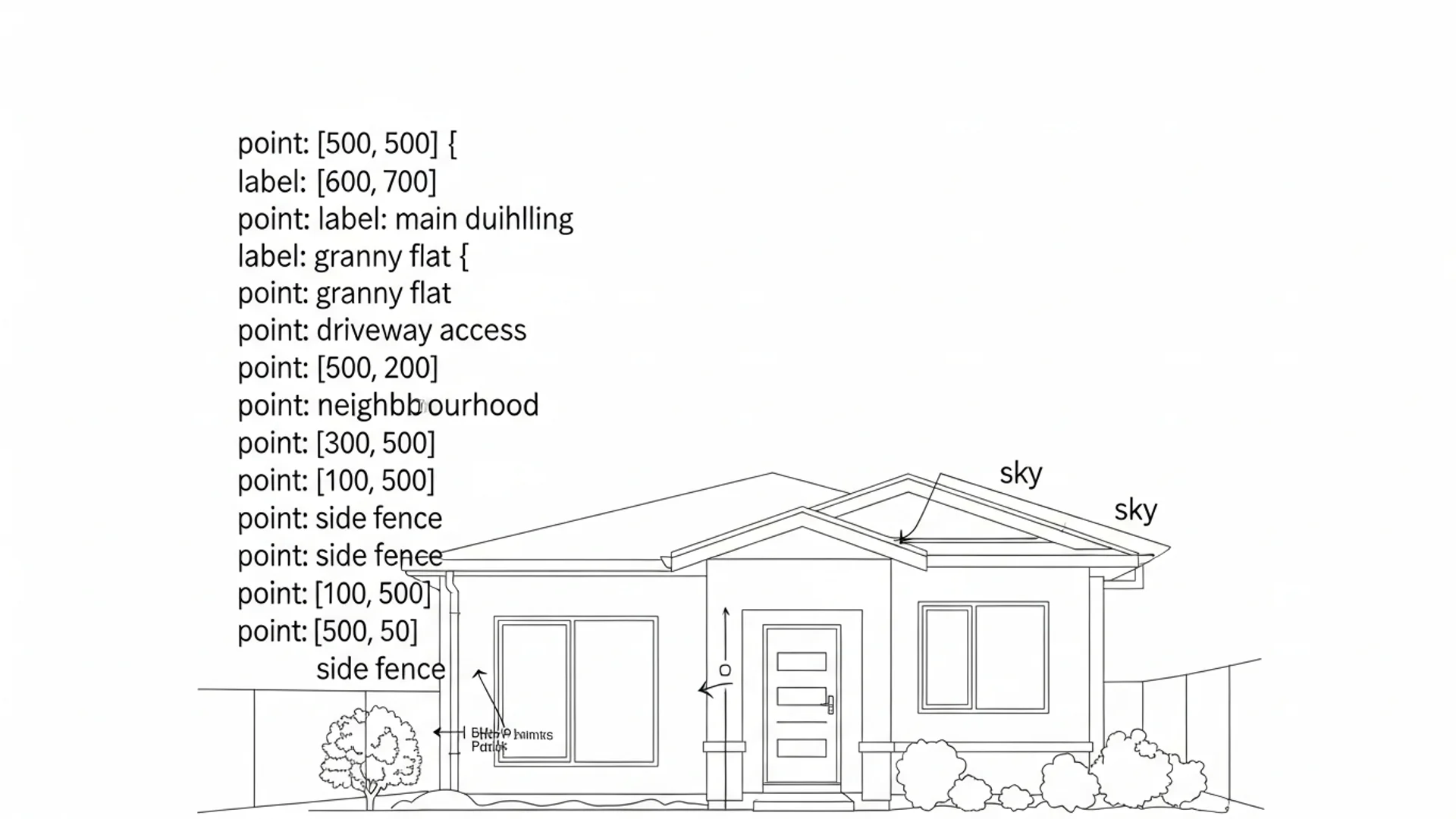
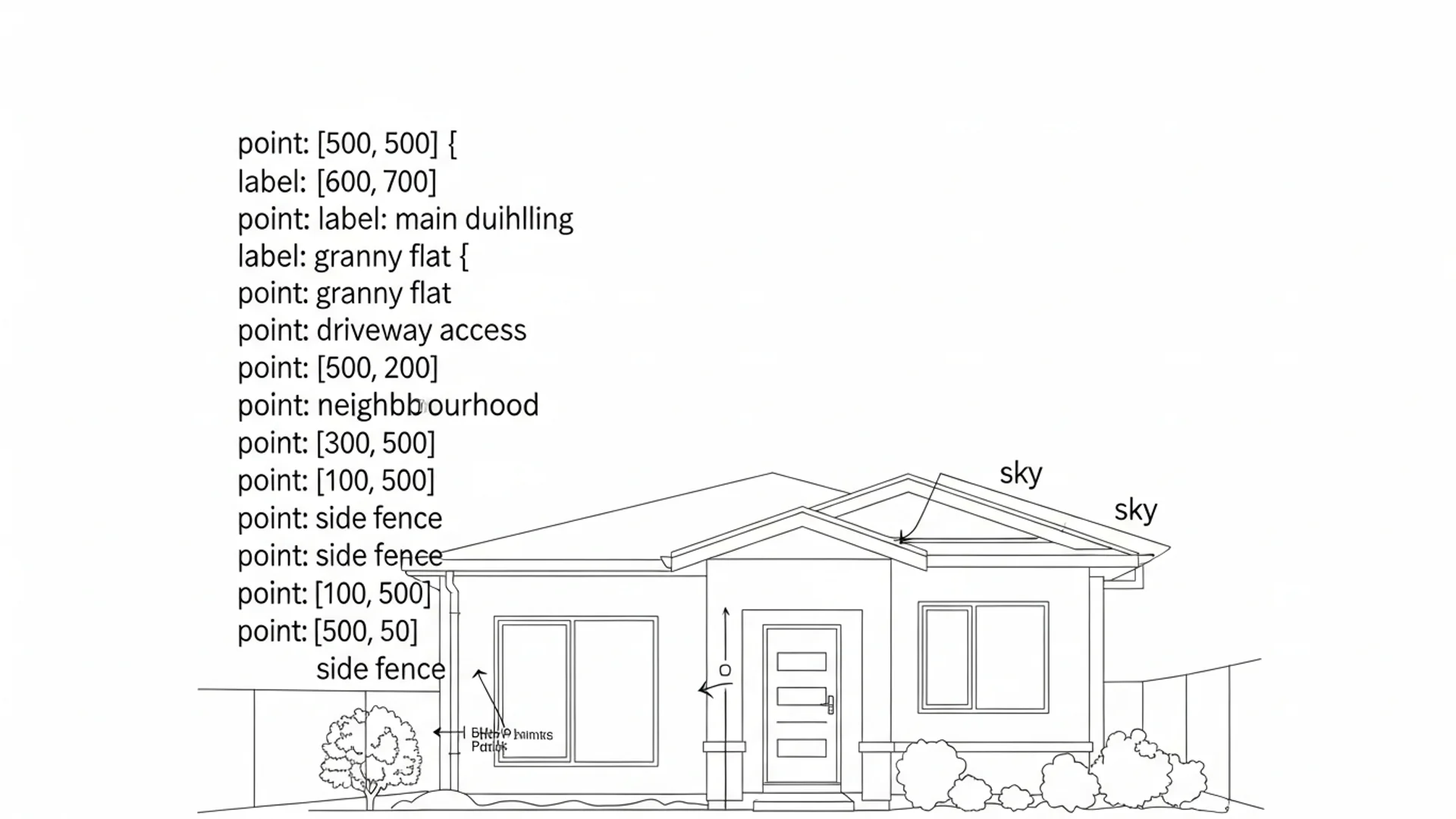
Granny Flat Rules in NSW: Approvals, Setbacks and CDC Requirements
How the Housing SEPP governs what you can build, where you can build it, and which approval pathway applies to your block.
NSW has the most established granny flat regulatory framework in Australia. The State Environmental Planning Policy (Housing) 2021 — commonly called the Housing SEPP — sets the rules for secondary dwellings across the state, including a maximum floor area of 60 square metres, minimum lot sizes, setback distances, and two distinct approval pathways. If your property meets all the criteria, you can use the fast-track Complying Development Certificate (CDC) pathway and have approval in as little as 10 business days. If it doesn't, you’ll need a Development Application (DA) through your local council, which typically takes three to six months or longer.
The rules are specific and the details matter. A 449-square-metre block misses the CDC pathway entirely. A heritage conservation overlay forces you onto the DA track regardless of lot size. Understanding exactly which rules apply to your property — before you engage a builder or commission plans — can save you months of delays and thousands of dollars in wasted fees.
This page covers the key NSW granny flat regulations in detail: lot size and frontage requirements, setback distances by lot size, height rules, CDC exclusions, BASIX energy compliance, and council-specific variations. All references are to the Housing SEPP and related NSW planning instruments current as of April 2026.

How the Housing SEPP governs granny flats in NSW
The State Environmental Planning Policy (Housing) 2021 replaced the earlier Affordable Rental Housing SEPP and consolidated secondary dwelling provisions into a single instrument. Under the Housing SEPP, a granny flat is classified as a "secondary dwelling" — a smaller, self-contained dwelling on the same lot as a principal dwelling. One per lot. Maximum 60 square metres internal floor area — enough for a comfortable 2-bedroom layout but ruling out anything larger. Cannot be subdivided from the main property.
These rules apply statewide, regardless of which council area you're in. Individual councils can impose additional controls through their Local Environmental Plans (LEPs), but they cannot override the Housing SEPP's core provisions for complying development.
CDC vs DA: two approval pathways
The CDC (Complying Development Certificate) is the fast-track route. A private certifier — not your council — assesses your plans against a checklist of criteria defined in the Housing SEPP. If everything complies, approval can come through in 10 to 20 business days. No neighbour notification is required.
The DA (Development Application) goes through your local council. It takes three to six months as a minimum, and complex applications can stretch well beyond that. Council has discretion to approve, refuse, or impose conditions. Neighbour notification is required, and objections can further delay the process.
For a detailed comparison of costs, timelines, and when each pathway applies, see our CDC vs DA granny flat approval guide.
When CDC is available
Your property qualifies for the CDC pathway if it meets all of these criteria simultaneously:
- Lot size: Minimum 450 square metres
- Frontage: Minimum 12 metres at the building line of the existing dwelling
- Zone: R1, R2, R3, R4, or R5 residential zone (other zones may qualify under your council's LEP)
- No blocking overlays: The property must not be in a heritage conservation area, flood planning area, bushfire-prone land rated BAL-40 or Flame Zone, Class 1–2 acid sulfate soil area, riparian land, environmentally sensitive land, foreshore area, ANEF 25+ airport noise zone, or drinking water catchment area
If any single criterion fails, you cannot use the CDC pathway. A heritage overlay on an otherwise perfect 600-square-metre block means DA — no exceptions.
When you need a DA
You need a DA when your property or proposed design does not meet the CDC criteria. Common triggers include lots under 450 square metres, properties affected by overlays, or designs that cannot meet setback requirements. The DA pathway gives council discretion over the outcome, which means it can accommodate non-standard situations — but at the cost of time, fees, and uncertainty.
Setback distances: the numbers that shape your design
Setbacks determine how close your granny flat can sit to boundaries and to the main dwelling. They directly affect the buildable area on your block and often dictate whether a 1-bedroom or 2-bedroom layout is feasible.
Lots under 900 sqm (CDC pathway)
| Boundary | Minimum distance | |---|---| | Rear | 3 metres | | Side | 0.9 metres | | Front | Average of front setbacks of nearest two dwellings within 40 m on same road | | From principal dwelling | 1.8 metres (or fire-rated wall required) | | From trees over 4–6 m tall | 3 metres |
Lots 900 sqm and over
| Boundary | Minimum distance | |---|---| | Rear | 5 metres | | Side | 1.5 metres | | Front | Same averaging rule | | From principal dwelling | 1.8 metres |
The 3.8-metre height threshold
The maximum overall building height is 8.5 metres, but a critical threshold sits at 3.8 metres. Above this height, setback penalties apply. The rear setback penalty triples the height above 3.8 metres and adds it to the base rear setback. A 4.8-metre-tall granny flat on a lot under 900 square metres requires a rear setback of 3 + (1.0 × 3) = 6 metres. The side setback penalty divides height above 3.8 metres by four and adds it to the base side setback. Hipped roofs reduce effective building height compared to gabled roofs — a practical design decision that can recover 0.5 metres or more.
Other CDC design standards
Beyond setbacks and height, the Housing SEPP requires:
- Private open space: Minimum 24 square metres with a minimum 4-metre width, directly accessible from a living room
- Landscaping: At least 25% of the site must remain landscaped; 50% of the landscaped area must be behind the main dwelling
- Parking: No additional parking spaces are required for a secondary dwelling under CDC
- Rear laneway exception: Zero rear setback is permitted for up to 50% of the property width where the rear boundary adjoins a laneway
BASIX: energy and water compliance
A BASIX (Building Sustainability Index) certificate is mandatory before any CDC or DA can be issued in NSW. BASIX sets targets for water efficiency, thermal comfort, and energy use. Your designer runs the assessment using the online BASIX tool, and the certificate costs $50 (2025/26 financial year published schedule). Builders who include approvals in their turnkey package typically handle this as part of the process.
The granny flat must also comply with the National Construction Code (NCC) as a Class 1a dwelling — the same classification as a standard house. This covers structural integrity, fire safety, weatherproofing, and amenity requirements.
What these rules mean for your project costs
Approval pathway fees vary significantly. CDC costs typically run $3,000 to $8,000 including the private certifier's fee, BASIX certificate, engineering reports, and survey. DA costs range from $5,000 to $15,000 or more, depending on council fees, the complexity of the application, and whether you need additional reports for flood, heritage, or contamination assessments.
These approval costs sit in the professional and approval fees bucket of the overall granny flat cost breakdown — one of four cost categories alongside the base build, site works, and authority charges.
Setback distances also have a direct cost impact. Tighter setbacks on smaller blocks can force design compromises — a narrower granny flat footprint may require a less efficient layout, or boundary proximity may trigger fire-rated wall construction at additional cost.
Council-specific variations across NSW
While the Housing SEPP applies statewide, local conditions create significant variation in how easy it is to build:
- Flood-affected areas: Councils in Western Sydney — particularly Hawkesbury, Penrith, and parts of Blacktown — have extensive flood planning areas that block CDC eligibility for many properties
- Heritage areas: Inner Sydney councils (City of Sydney, Woollahra, Hunter's Hill) have widespread heritage conservation areas that force the DA pathway
- Bushfire-prone land: Blue Mountains, Ku-ring-gai, Sutherland, and many regional NSW councils have significant bushfire-prone land. BAL-40 and Flame Zone ratings block CDC entirely; lower ratings (BAL-12.5, BAL-19, BAL-29) allow CDC but require AS 3959-compliant construction at additional cost
Before engaging a builder, check the NSW Planning Portal's property search tool to confirm whether your specific lot has any overlays that affect eligibility. Your local granny flat builders can also advise on council-specific requirements in your area.
For a comparison with other states, see our national granny flat rules overview or the Victorian granny flat rules guide.
GrannyFlatGuide provides independent information to help you understand the granny flat building process. This is not legal, planning, or building advice. Regulations change, and requirements vary by council. Always verify current requirements with your local council or a qualified town planner before making decisions.
Granny flat builders in Australia
Browse profiles, compare service areas, and check reviews.

Garden Studios
★ 5.0 (63 reviews)
View profile →

Perway Ecopods
★ 5.0 (43 reviews)
Perth-based home renovation and construction company offering custom builds with transparent service.
View profile →
Out-Back Portable Buildings
★ 5.0 (25 reviews)
Custom-made, pre-fabricated transportable homes including granny flats, offices, and portable buildings.
View profile →
Adams Cabins
★ 5.0 (20 reviews)
Family-owned cabin builders specializing in log cabins, granny flats, and tiny homes in SE Queensland.
View profile →
ATN Constructions
★ 5.0 (18 reviews)
View profile →
Dare Constructions
★ 5.0 (16 reviews)
Steel frame construction specialist including granny flats, carports, sheds across Newcastle, Hunter Valley, and Sydney.
View profile →
GrannyFlatGuide is a comparison platform. Companies shown are filtered by relevance to this page. Listing does not imply endorsement. GrannyFlatGuide may receive a referral fee when you request quotes.
Put this into action
Check your property’s zoning and approval pathway, then connect with verified builders when you’re ready.
What can you build on your property?
Enter your address and we'll check your zoning, overlays, and what's possible on your block.
We use your address to check council zoning and planning rules — not stored until you choose to continue.
NSW has the most established granny flat regulatory framework in Australia. The State Environmental Planning Policy (Housing) 2021 — commonly called the Housing SEPP — sets the rules for secondary dwellings across the state, including a maximum floor area of 60 square metres, minimum lot sizes, setback distances, and two distinct approval pathways. If your property meets all the criteria, you can use the fast-track Complying Development Certificate (CDC) pathway and have approval in as little as 10 business days. If it doesn't, you’ll need a Development Application (DA) through your local council, which typically takes three to six months or longer.
The rules are specific and the details matter. A 449-square-metre block misses the CDC pathway entirely. A heritage conservation overlay forces you onto the DA track regardless of lot size. Understanding exactly which rules apply to your property — before you engage a builder or commission plans — can save you months of delays and thousands of dollars in wasted fees.
This page covers the key NSW granny flat regulations in detail: lot size and frontage requirements, setback distances by lot size, height rules, CDC exclusions, BASIX energy compliance, and council-specific variations. All references are to the Housing SEPP and related NSW planning instruments current as of April 2026.
How the Housing SEPP governs granny flats in NSW
The State Environmental Planning Policy (Housing) 2021 replaced the earlier Affordable Rental Housing SEPP and consolidated secondary dwelling provisions into a single instrument. Under the Housing SEPP, a granny flat is classified as a "secondary dwelling" — a smaller, self-contained dwelling on the same lot as a principal dwelling. One per lot. Maximum 60 square metres internal floor area — enough for a comfortable 2-bedroom layout but ruling out anything larger. Cannot be subdivided from the main property.
These rules apply statewide, regardless of which council area you're in. Individual councils can impose additional controls through their Local Environmental Plans (LEPs), but they cannot override the Housing SEPP's core provisions for complying development.
CDC vs DA: two approval pathways
The CDC (Complying Development Certificate) is the fast-track route. A private certifier — not your council — assesses your plans against a checklist of criteria defined in the Housing SEPP. If everything complies, approval can come through in 10 to 20 business days. No neighbour notification is required.
The DA (Development Application) goes through your local council. It takes three to six months as a minimum, and complex applications can stretch well beyond that. Council has discretion to approve, refuse, or impose conditions. Neighbour notification is required, and objections can further delay the process.
For a detailed comparison of costs, timelines, and when each pathway applies, see our CDC vs DA granny flat approval guide.
When CDC is available
Your property qualifies for the CDC pathway if it meets all of these criteria simultaneously:
- Lot size: Minimum 450 square metres
- Frontage: Minimum 12 metres at the building line of the existing dwelling
- Zone: R1, R2, R3, R4, or R5 residential zone (other zones may qualify under your council's LEP)
- No blocking overlays: The property must not be in a heritage conservation area, flood planning area, bushfire-prone land rated BAL-40 or Flame Zone, Class 1–2 acid sulfate soil area, riparian land, environmentally sensitive land, foreshore area, ANEF 25+ airport noise zone, or drinking water catchment area
If any single criterion fails, you cannot use the CDC pathway. A heritage overlay on an otherwise perfect 600-square-metre block means DA — no exceptions.
When you need a DA
You need a DA when your property or proposed design does not meet the CDC criteria. Common triggers include lots under 450 square metres, properties affected by overlays, or designs that cannot meet setback requirements. The DA pathway gives council discretion over the outcome, which means it can accommodate non-standard situations — but at the cost of time, fees, and uncertainty.
Setback distances: the numbers that shape your design
Setbacks determine how close your granny flat can sit to boundaries and to the main dwelling. They directly affect the buildable area on your block and often dictate whether a 1-bedroom or 2-bedroom layout is feasible.
Lots under 900 sqm (CDC pathway)
| Boundary | Minimum distance | |---|---| | Rear | 3 metres | | Side | 0.9 metres | | Front | Average of front setbacks of nearest two dwellings within 40 m on same road | | From principal dwelling | 1.8 metres (or fire-rated wall required) | | From trees over 4–6 m tall | 3 metres |
Lots 900 sqm and over
| Boundary | Minimum distance | |---|---| | Rear | 5 metres | | Side | 1.5 metres | | Front | Same averaging rule | | From principal dwelling | 1.8 metres |
The 3.8-metre height threshold
The maximum overall building height is 8.5 metres, but a critical threshold sits at 3.8 metres. Above this height, setback penalties apply. The rear setback penalty triples the height above 3.8 metres and adds it to the base rear setback. A 4.8-metre-tall granny flat on a lot under 900 square metres requires a rear setback of 3 + (1.0 × 3) = 6 metres. The side setback penalty divides height above 3.8 metres by four and adds it to the base side setback. Hipped roofs reduce effective building height compared to gabled roofs — a practical design decision that can recover 0.5 metres or more.
Other CDC design standards
Beyond setbacks and height, the Housing SEPP requires:
- Private open space: Minimum 24 square metres with a minimum 4-metre width, directly accessible from a living room
- Landscaping: At least 25% of the site must remain landscaped; 50% of the landscaped area must be behind the main dwelling
- Parking: No additional parking spaces are required for a secondary dwelling under CDC
- Rear laneway exception: Zero rear setback is permitted for up to 50% of the property width where the rear boundary adjoins a laneway
BASIX: energy and water compliance
A BASIX (Building Sustainability Index) certificate is mandatory before any CDC or DA can be issued in NSW. BASIX sets targets for water efficiency, thermal comfort, and energy use. Your designer runs the assessment using the online BASIX tool, and the certificate costs $50 (2025/26 financial year published schedule). Builders who include approvals in their turnkey package typically handle this as part of the process.
The granny flat must also comply with the National Construction Code (NCC) as a Class 1a dwelling — the same classification as a standard house. This covers structural integrity, fire safety, weatherproofing, and amenity requirements.
What these rules mean for your project costs
Approval pathway fees vary significantly. CDC costs typically run $3,000 to $8,000 including the private certifier's fee, BASIX certificate, engineering reports, and survey. DA costs range from $5,000 to $15,000 or more, depending on council fees, the complexity of the application, and whether you need additional reports for flood, heritage, or contamination assessments.
These approval costs sit in the professional and approval fees bucket of the overall granny flat cost breakdown — one of four cost categories alongside the base build, site works, and authority charges.
Setback distances also have a direct cost impact. Tighter setbacks on smaller blocks can force design compromises — a narrower granny flat footprint may require a less efficient layout, or boundary proximity may trigger fire-rated wall construction at additional cost.
Council-specific variations across NSW
While the Housing SEPP applies statewide, local conditions create significant variation in how easy it is to build:
- Flood-affected areas: Councils in Western Sydney — particularly Hawkesbury, Penrith, and parts of Blacktown — have extensive flood planning areas that block CDC eligibility for many properties
- Heritage areas: Inner Sydney councils (City of Sydney, Woollahra, Hunter's Hill) have widespread heritage conservation areas that force the DA pathway
- Bushfire-prone land: Blue Mountains, Ku-ring-gai, Sutherland, and many regional NSW councils have significant bushfire-prone land. BAL-40 and Flame Zone ratings block CDC entirely; lower ratings (BAL-12.5, BAL-19, BAL-29) allow CDC but require AS 3959-compliant construction at additional cost
Before engaging a builder, check the NSW Planning Portal's property search tool to confirm whether your specific lot has any overlays that affect eligibility. Your local granny flat builders can also advise on council-specific requirements in your area.
For a comparison with other states, see our national granny flat rules overview or the Victorian granny flat rules guide.
GrannyFlatGuide provides independent information to help you understand the granny flat building process. This is not legal, planning, or building advice. Regulations change, and requirements vary by council. Always verify current requirements with your local council or a qualified town planner before making decisions.
Granny flat builders in Australia
Browse profiles, compare service areas, and check reviews.
Garden Studios
★ 5.0 (63 reviews)
View profile →
Perway Ecopods
★ 5.0 (43 reviews)
Perth-based home renovation and construction company offering custom builds with transparent service.
View profile →
Out-Back Portable Buildings
★ 5.0 (25 reviews)
Custom-made, pre-fabricated transportable homes including granny flats, offices, and portable buildings.
View profile →
Adams Cabins
★ 5.0 (20 reviews)
Family-owned cabin builders specializing in log cabins, granny flats, and tiny homes in SE Queensland.
View profile →
ATN Constructions
★ 5.0 (18 reviews)
View profile →
Dare Constructions
★ 5.0 (16 reviews)
Steel frame construction specialist including granny flats, carports, sheds across Newcastle, Hunter Valley, and Sydney.
View profile →
GrannyFlatGuide is a comparison platform. Companies shown are filtered by relevance to this page. Listing does not imply endorsement. GrannyFlatGuide may receive a referral fee when you request quotes.
Put this into action
Check your property’s zoning and approval pathway, then connect with verified builders when you’re ready.
What can you build on your property?
Enter your address and we'll check your zoning, overlays, and what's possible on your block.
We use your address to check council zoning and planning rules — not stored until you choose to continue.
NSW granny flat rules at a glance
60 sqm maximum floor area
All secondary dwellings in NSW are capped at 60 square metres of internal floor area under the Housing SEPP. This applies to both CDC and DA pathways. If you need more space, you’re looking at a dual occupancy — a different planning framework with different rules and higher costs.
CDC fast-track: 10–20 business days
The Complying Development Certificate pathway lets a private certifier approve your granny flat without council involvement. Your lot must be at least 450 square metres with 12 metres of frontage, and your design must meet all Housing SEPP standards for setbacks, height, and site coverage.
Setbacks that shape your design
On lots under 900 square metres, your granny flat must sit at least 3 metres from the rear boundary, 0.9 metres from side boundaries, and 1.8 metres from the main dwelling. Larger lots require wider setbacks. These distances directly determine where and how big you can build.
BASIX certificate required
Before any CDC or DA can be issued, you need a BASIX certificate confirming your design meets NSW energy and water efficiency targets. The certificate costs $50 and your designer or builder typically handles the application as part of the approval process.
Frequently asked questions about NSW granny flat rules
The maximum internal floor area for a secondary dwelling (granny flat) in NSW is 60 square metres under the Housing SEPP. This cap applies to both the CDC and DA approval pathways. If you need a larger dwelling, you would need to pursue a dual occupancy application, which is a separate planning framework with different requirements and costs.
Not necessarily. If your property meets all the criteria for complying development under the Housing SEPP — including minimum 450 square metres lot size, 12-metre frontage, appropriate zoning, and no blocking overlays — you can use a private certifier through the CDC pathway instead of going through council. You still need formal approval (a CDC), but it bypasses the council assessment process.
A CDC (Complying Development Certificate) is a fast-track approval issued by a private certifier in 10 to 20 business days, available when your property and design meet all Housing SEPP criteria. A DA (Development Application) is assessed by your local council, takes three to six months or longer, and is required when any CDC criterion is not met. CDC does not require neighbour notification; DA does.
For the CDC fast-track pathway, your lot must be at least 450 square metres with a minimum 12-metre frontage at the building line of the existing dwelling. If your lot is smaller, you may still be able to build a granny flat through the DA pathway, subject to council assessment and approval.
On lots under 900 square metres using the CDC pathway: 3 metres from the rear boundary, 0.9 metres from side boundaries, and 1.8 metres from the principal dwelling (or a fire-rated wall is required). On lots 900 square metres and over: 5 metres rear, 1.5 metres side. Buildings above 3.8 metres in height incur additional setback penalties.
You can, but not through the CDC fast-track pathway. Properties in heritage conservation areas are excluded from complying development and must use the DA pathway through council. This means longer assessment times, higher fees, and council discretion over the outcome. Heritage requirements may also impose design constraints on materials, colours, and building form.
Yes. A BASIX (Building Sustainability Index) certificate is mandatory before any CDC or DA can be issued for a granny flat in NSW. The certificate confirms your design meets NSW targets for water efficiency, thermal comfort, and energy use. The fee is $50 (2025/26 financial year schedule), and your designer or builder typically handles the application.
Yes. NSW has no restrictions on who can live in or rent a secondary dwelling. You can rent it to anyone — family or non-family — under standard residential tenancy laws. Short-term rental accommodation (such as Airbnb) is also permitted, subject to the NSW STRA framework which caps non-hosted short-term rentals at 180 days per year in Greater Sydney.
The CDC pathway typically takes 10 to 20 business days from lodgement to approval. The DA pathway takes three to six months as a minimum, and complex applications or those attracting objections can take considerably longer. After approval, you also need a construction certificate before building can start and an occupation certificate before anyone can move in.
No. The Housing SEPP limits each lot to one secondary dwelling. The lot also cannot be subdivided to separate the granny flat from the principal dwelling. If you want two dwellings of similar scale on one lot, that falls under the dual occupancy framework, which has different planning rules and approval requirements.
An unapproved granny flat is considered an unauthorised structure. Council can issue orders requiring rectification or demolition. When you sell the property, buyers and their solicitors will ask for the CDC or DA approval and the occupation certificate — if these don't exist, the granny flat may reduce rather than increase your property value. Retrospective approval is possible in some cases but is not guaranteed and can be costly.
Related guides
Guide
Granny Flat Rules Victoria 2026 — Planning & Building Guide
Victoria's granny flat rules explained — planning permits, 60sqm cap, building requirements, DPU changes, and how the 2023-2026 reforms affect your build.
Cost guide
2 Bedroom Granny Flat Cost — Pricing by Build Type (2026)
A 2-bedroom granny flat costs $114,000–$237,000 GST-inclusive in Australia. See pricing by build type (kit, prefab, custom), state, and finish level.
Guide
How to Choose a Granny Flat Builder: A Vetting Guide
Vet a granny flat builder the right way — verify licences, insurance, references and contracts. Questions to ask and red flags to avoid.
Cost guide
Granny Flat Prices in Australia — Real Builder Pricing Compared (2026)
Compare real granny flat prices across budget prefab, mid-range custom, and premium turnkey tiers. See what the 'from' price includes and what you'll actually pay in 2026.
Ready to compare granny flat quotes in NSW?
Connect with licensed NSW builders who understand Housing SEPP requirements, CDC pathways, and council-specific variations in your area.
Join 1,000+ Australians who've used GrannyFlatGuide to research their granny flat project
Get free quotes